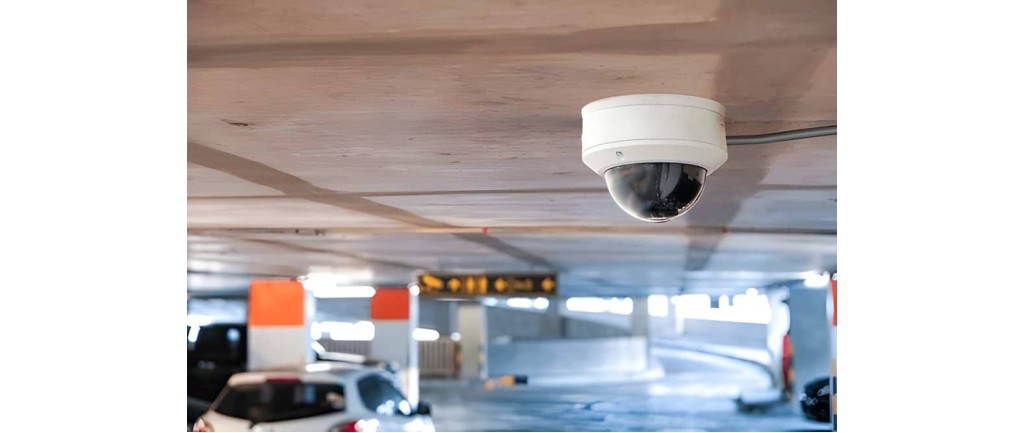
Investing in a brand-new security system? Wondering if you need indoor or outdoor security? We’re here to offer some guidance and advice.
With residential and commercial theft on the rise (Source: RACV), there’s never been a more important time to invest in genuine security measures. In this article, we’ll break down the major factors that influence whether you need indoor or outdoor devices, types of equipment that perform best in each setting, and how the right system provides stronger protection than adding cameras or sensors at random.
Understanding What Indoor and Outdoor Security Actually Do
Security is most effective when it’s layered and built around the property’s natural vulnerabilities. This is why it’s so important to understand the distinction between interior and exterior equipment.
Outdoor Security
Outdoor security is designed to counter threats before they reach the building or main area of activity. The equipment that’s typically installed outside includes:
- > Outdoor CCTV
- > Perimeter alarms
- > Motion sensors and floodlights
- > External sirens
- > Access control
- > Intercoms
In high-risk settings such as larger construction sites and shopping centre parking lots, outdoor CCTV installation is definitely common practice across Australia. However, many smaller projects are often unprotected, lacking the measures necessary to both deter and capture instances of theft.
Unmonitored outdoor areas are often where intruders strike first, making exterior coverage non-negotiable for sites with valuable equipment or tools.
Indoor Security
Indoor systems detect movement, tampering, or intrusion inside the property. These typically include:
- > Internal motion detectors
- > Door and window sensors
- > Internal CCTV
- > Glass-break detectors
- > Internal sirens
- > Touchpads and controls
- > Alarms and related devices
- > Internal access control
Indoor devices work as a final line of defence. In a commercial or industrial sense, this will mean guarding high-value inventory, goods, administrative records, cash storage, equipment rooms, and private spaces. At home, it’s protecting your personal possessions, smart devices, and various other valuables.
Factors to Consider
The truth is, the right approach depends heavily on your environment — the layout of the site, the type of activity occurring there, and the specific risks surrounding each area. For example, warehouses and offices have completely different requirements to a residential property or a block of flats.
Here’s some things to keep in mind. But, if you’re already keen to get the ball rolling, the best thing to do is contact our team and arrange a consultation.
1. Type of Environment
Different locations naturally have different risk profiles, and this drastically affects whether indoor or outdoor devices should be the priority.
Car Parks (Open-Air and Underground)
Car parks are one of the highest-risk environments due to poor visibility, blind corners, and constant vehicle movement. Outdoor surveillance is crucial here, especially CCTV cameras with:
- > Wide dynamic range
- > Weather-resistant housings
- > Low-light or colour-night-vision capabilities
- > High resolution for identifying number plates
Of course, perimeter protection won’t work alone, and internally placed cameras are often needed along ramps, stairwells, corridors, and lift areas. This is because incidents inside car parks often occur away from perimeter boundaries. A combination of interior and exterior coverage, therefore, creates a complete audit trail of vehicle entry, movement, and exit.
If you need the best of both worlds, the HiLook 4K Total Protection Package include cameras well-suited for both internal and external coverage:
Warehouses and Industrial Sites
Warehouses require a different approach. As we discussed in a recent article, warehouses are prime targets for after-hours intrusions due to high-value stored goods and large blind spots. Outdoor systems cover:
- > Fences
- > Loading docks
- > Rear service lanes
- > Delivery gates
- > External roller doors
Warehouses will also need strong indoor security presence, and the reasoning is two fold, meaning both for day-to-day operations and surveillance in the unfortunate event of a break-in.
Commercial-grade options like the Bosch Solution 6000 Alarm System support both wired and wireless indoor components. If you’re needing reliable security systems for a warehouse in Melbourne, we’re more than capable of lending a helping hand.
Residential Properties
It’s no secret that residential crime has become an increasingly concerning issue in our state.
Over the past year, the “most frequently stolen items from Victorian homes were cash, documents, personal belongings, electrical appliances, and power tools.” (Source: RACV)
This only goes to show that if you have anything of value exposed, thieves are more than likely to take it. Fortunately, there are many security devices and systems available.
Fully equipped alarm systems are always a great option, as they are also easy to pair with CCTV cameras, intercoms, touchpads, and smart app functionality. Be sure to read our recent blog on ‘How to Find the Right Home Alarm System in Melbourne’ for further info!
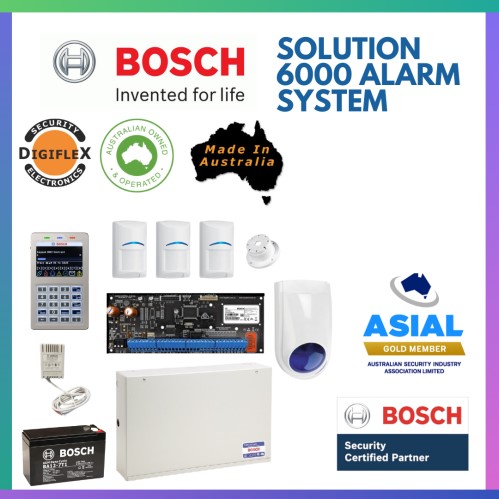
The Bosch Solution 6000 IP Alarm System – Great value and genuine peace of mind! Designed and manufactured in Australia to meet local and international requirements, the Solution 6000 panel offers an extensive feature list.
2. Layout and Accessibility
The physical layout of a property significantly shapes which system performs best.
Large, Open Outdoor Areas
Loading docks, yards, car parks, and wide-open warehouses require robust outdoor CCTV to capture movement across large distances. High-resolution IP cameras help identify objects and individuals even when they’re far from the vantage point.
Complex Indoor Spaces
Corridors, internal stockrooms, server rooms, admin offices, and meeting rooms require indoor protection tailored to narrow sightlines and internal traffic flow.
Buildings With Multiple Access Points
More entry points = more outdoor monitoring.
More internal pathways = more indoor sensors.
A multi-building complex may need:
- > External perimeter coverage between buildings
- > Internal devices in each separate structure
3. Time of Activity and Operating Hours
Understanding when a site is occupied determines where you need detection.
24/7 Operating Sites
Outdoor systems provide real-time awareness of what’s happening in surrounding areas. Indoor systems protect sensitive rooms even while people are on-site.
After-Hours Vulnerable Sites
Construction yards, warehouses, and shops are especially vulnerable after hours. Outdoor CCTV becomes the primary first-line defence when no staff are present. Indoor alarms act as the final barrier once someone breaches the premises.
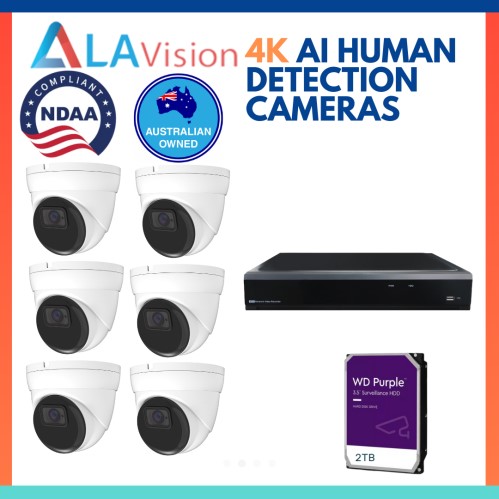
The LA VISION 4K CAMERA PACKAGE is a premium package delivering top-tier quality, designed for both homes and businesses in Australia. Contact us and enquire about it today!
4. Environmental Conditions
Outdoor devices must handle:
- > Rain, heat, dust
- > Glare from sunlight
- > Night-time low-light conditions
- > Vibration (from machinery or passing traffic)
Indoor devices don’t face these issues, but must be placed carefully:
- > Away from air vents
- > Away from pets
- > Away from moving curtains
- > Not directly facing large windows
Environmental challenges also determine whether you need wired or wireless systems. As we covered in another recent article, wired systems offer reliability in tough weather conditions, while wireless systems offer flexibility indoors.
5. The Value and Mobility of Assets
This factor often determines where protection is most needed.
High-Value External Assets
Examples include:
- > Construction equipment
- > Air conditioning units
- > Vehicles
- > Generators
- > Tools and materials stored outdoors
Outdoor CCTV and sensors are essential here because asset theft often occurs long before an intruder enters the building.
High-Value Internal Assets
Examples include:
- > Server rooms
- > Cash handling rooms
- > Inventory storage
- > Safety vaults
- > Medical supplies rooms
These areas require indoor alarms, internal cameras, and reinforced internal access control.
6. Visibility and Deterrence Requirements
Outdoor CCTV cameras have always been a strong visual deterrent. Positioning a camera above a gate or driveway sends an instant message that the site is monitored.
Indoor cameras are generally more discreet and are used for confirmation, investigation, and evidence collection.
Because deterrence is primarily an outdoor function, visible outdoor systems are particularly effective in:
- > Retail storefronts
- > Car yards
- > Petrol stations
- > Hotel entrances
- > School perimeters
- > Shopping centres
- > Logistics facilities
- > Warehouses
- > Construction sites
7. Power and Connectivity
Outdoor cameras and alarms typically require stable power and often run on hard-wired connections for reliability.
Indoor sensors may be:
- > Hard-wired
- > Wireless
- > Battery-powered
- > Hybrid
Many of the superior systems we install use a hybrid approach, delivering the stability of wired devices outdoors and flexibility indoors.
For example, the HiLook 4K Total Protection Package (Hard-Wired Alarm) integrates indoor/outdoor components seamlessly:
8. Monitoring Needs and Response Time
If your priority is quick response, you need both indoor and outdoor alerts.
Outdoor: early warning
Indoor: breach confirmation
Outdoor sensors may activate recording, trigger lights, or send early notifications. Indoor alarms confirm the incident, narrow the location, and activate sirens.
This layered approach reduces response times significantly — a key point raised in our coverage on CCTV efficiency.
Combining Your Indoor and Outdoor Security Systems
Purely outdoor systems catch intruders early, but fail once someone gets inside. Indoor systems activate only after the breach occurs.
A combined system:
- > Detects movement earlier
- > Captures more usable footage
- > Reduces blind spots
- > Provides better forensic evidence
- > Triggers alarms at multiple layers
- > Offers stronger deterrence
- > Allows for more accurate notifications
Modern systems are designed to work together through apps like Hik-Connect, allowing you to:
- > Arm and disarm areas separately
- > View internal and external feeds
- > Receive alerts from both zones
- > Activate two-way audio
- > Review recorded footage
This is one of the biggest reasons many customers prefer hybrid setups over standalone systems.
Still Unsure? Reach Out to the VIP Security Team Today
From homes to businesses, car parks, and shopping strips, would-be thieves will target any area they can, even more so if there’s no security system in place!
Whether you’re security for pubs and bars, warehouse security systems or residential CCTV cameras in Melbourne, our experts will happily walk you through the options. We’ve worked with everyone from BP to IGA, Century 21, Nandos, and so many other of Australia’s biggest companies.
Contact us now and take the first step towards smarter, safer security.