


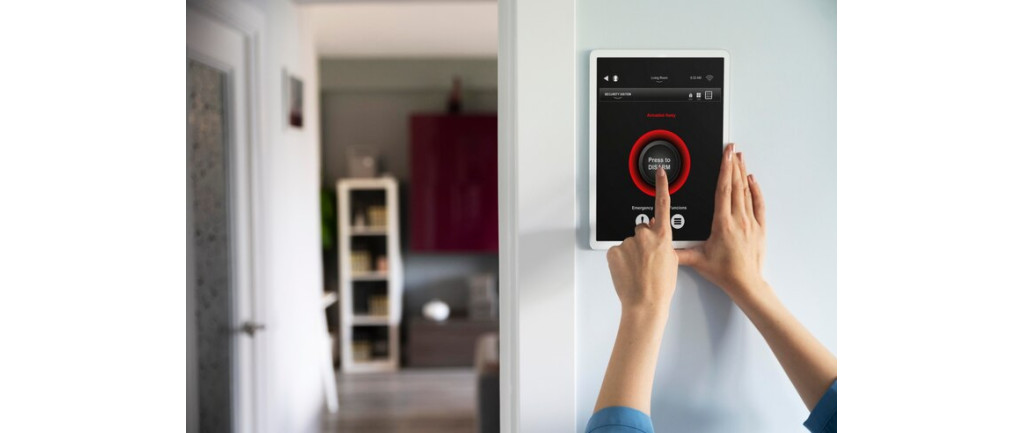
Keeping your business safe with an alarm system is one of the most important things you can do. Often it is one of the first decisions you try to make. How will I keep my warehouse secure? What options do I have and what is the best choice for me? One of the questions is, should I go with a wired or a wireless alarm system? In this world of Wi-Fi and Bluetooth, we have an automatic tendency to think wireless is best, but is that the case?
At VIP Security we’ve been helping Melbourne businesses and homeowners choose the right security system for over 30 years. You could choose a Hikvision wireless alarm system or a hardwired Bosch system for a new build, but understanding the key differences between each type of security systems in Melbourne we can install can help you with an informed decision.
In this article we break down the pros and cons of both types of alarm systems, so you can choose the right protection for your home or business.
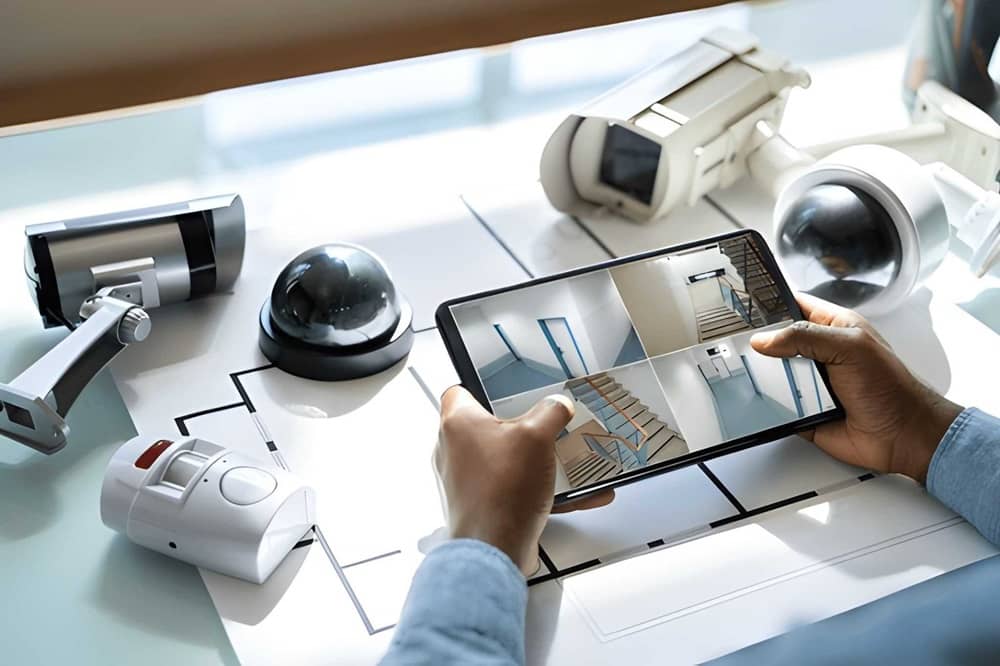
What Are Wired Alarm Systems?
Wired alarm systems are the more traditional type of security system where all components are hardwired into the power and the monitoring system, all controlled centrally. Aspects such as door or window sensors, fence monitoring, cameras, are all wired into a central hub.
They are reliable because they don’t rely on a wireless signal or a Wi-Fi, or a radio frequency to work. This means they’re not susceptible to jamming or network failures and hacking.
Each component is powered by the main electrical grid, but has a battery backup in case the grid goes down. So there is no need to check and maintain batteries, and if someone forgets, you’re not vulnerable.
They are commonly used in new builds where a wireless network has not yet been established.
How Wired Alarm Systems Work
They work by running physical cables from sensors, such as doors or motion detectors, directly to a central console. It is a continuous circuit running on a low voltage. This creates a closed loop. If this loop is ever broken, such as when someone opens a door without entering a code, or using the right key, then this will trigger an alarm.
Typically these systems are hard-wired into the powergrid, or the home’s electrical supply. This guarantees continuity of service, as long as the electricity is on, however usually they have a battery backup in case of a power outage.
What Are Wireless Alarm Systems?
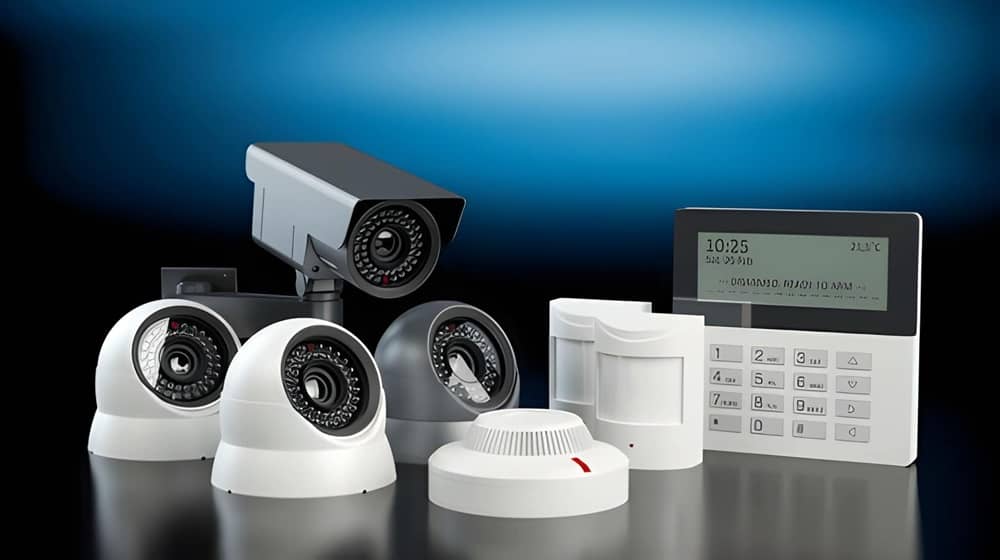
Wireless alarm systems consist of sensors, such as motion sensors, fence contacts, much like the wired systems, but they communicate with the main control panel through radio signals or Wi-Fi.
They often use batteries to power them, and often with the low power usage, the batteries can last for years.
They are often designed for the Internet of Things, which means you can remotely monitor your security with apps on your smart phone from anywhere in the world.
While there can be distance limitations with signals, technology is such that these issues are becoming fewer. Wi-Fi boosters can extend the range of signal for both home situations and commercial premises.
How Wireless Alarm Systems Work
For commercial and industrial facilities, it is more secure for wireless alarms systems to work on their own radio frequency (RF). This is more secure than relying on Wi-Fi. For a home situation, Wi-fi is usually secure enough, as long as no one knows your password.
If a sensor picks up an anomaly, motion sensor detects something unusual, or someone opens a door without the proper authority, then an alarm is triggered. The sensor sends a signal via RF to the main control panel.
This then will set off alarms locally, and send alerts to apps and people who need to be notified. It will do this via an internet connection or a cellular connection. As it is just an alert that something has been triggered, it is considered safe to communicate this through more public channels.
Sensors are often powered by long lasting batteries. You can even get remote CCTV cameras powered by solar. Battery levels need to be checked regularly, so you don’t accidentally have a battery running out and your premise being less secure.
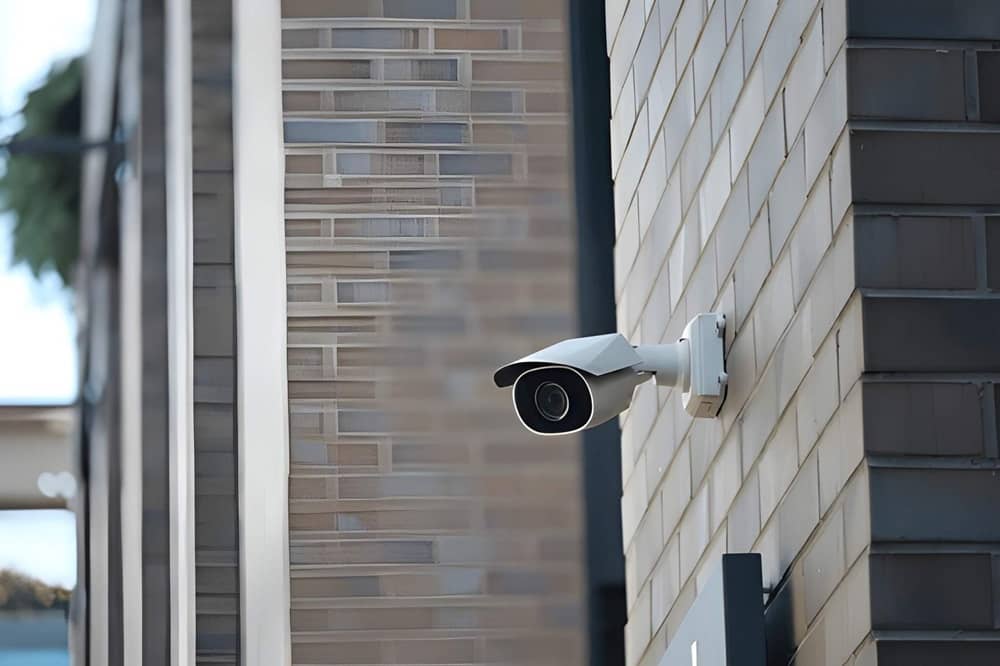
Remote CCTV cameras are a popular wireless option for Melbourne homes and businesses looking for flexible outdoor coverage.
How Do the Two Systems Compare?
Now let’s start looking at how these two types of security systems compare with each other.
Installation: Wired vs Wireless
Wired systems need physical cables running from sensors and installations to a central panel. You would need a professional electrician to wire it all up and run the cables within the walls safely.
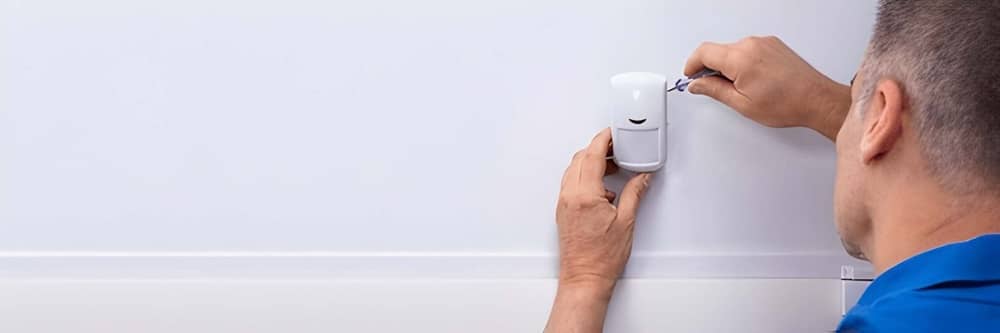
Wireless options are fast and easy to install yourself. Often there is no drilling or other manual installation required, and you can usually connect sensors and cameras to the central unit simply by turning them on and having them detected. Good for temporary situations, such as renting.
Reliability and Signal Strength
Wired security is very reliable when it comes to signal strength as all data is relayed through physical cables, rather than through the aether. They are immune to net hacking and RF interference.
High quality modems and network hubs are often very reliable, but you still may suffer from signal jamming, thick walls and sometimes distance when it comes to signal transmission.
Cost Comparison: Upfront vs Long-Term
With a wired system the upfront costs are often higher, due to labour-intensive installation. VIP Security has a Bosch System 3000 package that starts at $795 fully installed. However, it can be difficult to nail down a price as each installation is different.
The long-term costs for a wired system, however, are low. You don’t need to replace batteries, there are no wireless subscription fees to worry about.
For a wireless system, installation costs are generally lower as you can often do it yourself and there are no cables needing to be laid by a professional. However some of the technology involved can be more costly. The Bosch Solution 3000 Hybrid Wireless starts from $1195 fully installed, which is a reflection of the technology involved.
Ongoing costs for a wireless system include any subscription to the internet, and battery replacement, but these are minor costs in the long term.
Maintenance and Upkeep
A wired alarm system requires very little ongoing maintenance and upkeep. They are very much set and forget with reliable components.
A wireless system needs regular checking for batteries, especially for sensors, and you need to ensure all software is up to date.
Here is a table so you can better see the differences to compare.
| Features | Wired Alarm System | Wireless Alarm System |
|---|---|---|
| Installation | Difficult. Running cables through walls can require drilling and a lot of physical labour. | Easy, often DIY. Adhesive can attach sensors, and they often connect to the central hub through a wireless network or Bluetooth. |
| Reliability | Very good. No signal interference or jamming. | Good. Can be susceptible to frequency jamming, but this is rare. |
| Maintenance | Low. No batteries to change, just occasional checks for physical damage. | Moderate. Batteries need replacing every couple of years, along with occasional checks for physical damage. |
| Flexibility | Low. Sensors and cameras are generally fixed in place. | High. Cameras and sensors can be moved while maintaining a wireless connection. |
| Cost | Higher upfront cost, lower ongoing costs. | Lower upfront cost, with ongoing battery replacement and possible subscription costs. |
| Best for | New builds and permanent commercial or industrial sites. | Homeowners and temporary locations. |
If you’re in Dandenong, Frankston, or anywhere across Melbourne’s south-east, VIP Security can help install wireless or wired security systems for your home or workplace. Call 1300 130 115 today.
Why VIP Security Recommends the Right System for Your Property
VIP Security will not offer a one-size-fits-all solution when it comes to security. We know the value of good security, both from a point of view of protecting what is yours, and the sense of safety you feel knowing the system you’ve installed is top of the line.
We will assess your situation and your budget and come to a solution which best balances both of these considerations. Our team wants to give you the best tailored system that covers your requirements, and your premise.
We stock both wired and wireless security options across Bosch, Paradox and Hikvision brands, so you’re not locked into one brand and you don’t need to feel like we’re pushing one brand onto you.
Everything we sell we test rigorously and we guarantee their reliability. If something goes wrong we have top notch after-sales service and support.
All of our technicians are fully qualified to install both wired and wireless systems. This includes being qualified to crawl through your wall space threading the cables for a wired system, so you don’t have to.
Which Alarm System Should You Choose?
The answer to this question is- it depends. We will walk you through options, considerations and what we believe is best for you, but ultimately it is you who should decide. And here are some factors to consider:
- New build or good roof space– then a wired option is often the best choice. You can fit the wiring in without any mess and trouble, and you don’t need to worry about Wi-Fi going out or radio jammers cutting your signal.
- Existing Home or renting– a wireless option suits best. If renting, you can take the system with you if and when you leave. For an existing home, sometimes trying to install new cabling can be expensive, an almost mini-renovation.
- Commercial or Industrial Property– a hybrid option can be a good fit. Remote cameras in the car park as a wireless option, door monitoring and motion sensors closer to important buildings being hardwired. This gives you some flexibility and some reliable permanence.
The best approach is simply to get professional advice. VIP Security looks closely into each customer’s concerns and provides a system to suit their budget and requirements precisely. We can give you an obligation free quote for your security system. Contact our team today and let’s talk about wired and wireless options to make your premise safe and secure.
