


Installing security cameras is one of the easiest ways to protect your property and feel more secure.
However, when installing security cameras in Melbourne, you must abide by Victorian laws which state clear boundaries around placement, privacy, and more. You could risk breaching the Surveillance Devices Act 1999 (Vic) without even knowing it, just because you want to cover your fenceline, and get a big view of your neighbour’s back yard.
If you’re considering CCTV cameras at home, it pays to understand what the legal framework is before you begin. This guide will break down Victoria’s current laws in plain English, covering camera placement, audio recording, footage storage and more.
Do You Need a Permit for Home CCTV in Victoria?
To actually install a security camera in your Melbourne home, you don’t need a permit in Victoria. You do, however, need to consider privacy laws. The Surveillance Devices Act 1999 has many aspects to it you must adhere to, including it being an offence to record people in private areas without consent.
Only point your camera at public spaces, such as the street, or your own property, such as your driveway or your yard. Don’t point your camera into your neighbour’s backyard or into their windows.
Do not record conversations. You are not allowed to record audio of other people without consent.
If you’re renting a home and wish to install CCTV you need permission from the landlord to do so, before installing.
You, personally, don’t need a security licence to install CCTV yourself, at your own home. However, if you pay someone else to install cameras for you, they must hold a valid Victorian Security Business/Individual Licence and an Open Cabler’s Licence, to install a wired CCTV system.
What the Law Says About Filming Neighbours and Public Areas
In Australia, you are permitted to film public spaces such as the front of your home, the footpath and street, for security purposes. However, it is illegal to record ‘ ‘private areas’, such as bedrooms or bathrooms of your neighbours.
There is a general expectation of privacy you need to consider. People are allowed quiet enjoyment of their own home and their own property, without being under surveillance.
When you install your cameras make them visible, mount them in plain sight and have signs visible that say cameras are in use. Don’t install fake cameras. You can also register with the Victorian Police, which can help them solve crimes. They can request footage from your cameras, especially those facing the street.
If there are problems with your neighbours, try talking first. They might not know that you’ve pointed the cameras in your space and not theirs.
If you believe a camera is pointing into your space, and talking with your neighbours isn’t working, free mediation is available through the Dispute Settlement Centre of Victoria.
From there, if mediation is unsuccessful, you can report the incident to Victorian Police and refer to the Surveillance Devices Act.
Audio Recording Rules
Under Victorian law, video and audio are treated differently. Recording video on your property is pretty much legal, but recording audio via CCTV is highly restricted. You need clear consent to record audio, as the law protects ‘private conversations’.
In Victoria, the Surveillance Devices Act 1999 is what dictates what you can and cannot record, or how you use audio. It treats the microphones that are a part of CCTV cameras as ‘listening devices’. There are three scenarios you need to consider:
- > Private Conversations. You cannot use a listening device to record a private conversation that occurs on or in private property, such as someones yard or in their home, unless you have permission from all people involved in the conversation.
- > Public vs. Private. If someone is speaking in a public space where anyone can hear, then it is not considered a private conversation. However, if they are on private property and you are on public property, they will have the expectation of privacy in item 1.
- > The One-Party Consent Exemption. If you are a part of the conversation, you may record the conversation without consent from the other party. However, you are not allowed to share that recording with others, unless you gain consent from the participants, or you need it for legal or disciplinary proceedings.
With CCTV cameras, often microphones are a part of the actual camera itself. You may pick up incidental conversations on private land or driveways. Businesses cannot record everything an employee says, not without consent. Even though a business premise is not a private residence, employees still have a reasonable expectation of privacy.
The easiest way to stay out of trouble is to turn the audio off. This removes the risk of any legal ramification of recording people’s conversations without consent.
Hikvision 6Mp IP CCTV Security Camera System
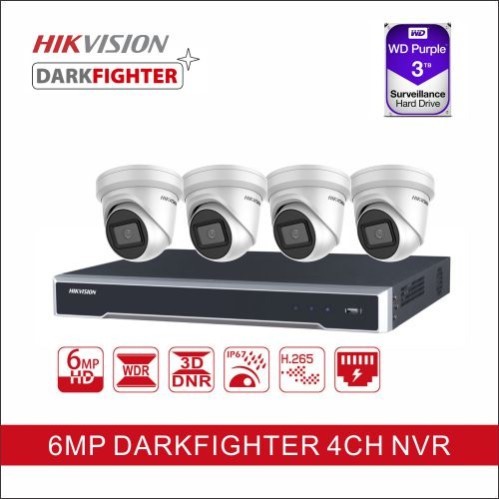
The Hikvision 6 Mega Pixel IP CCTV Security Camera System is a high end package providing the best quality in its category. Suitable for all homes and businesses.
- > Superior Image Quality: The cameras shoot at up to 6 megapixels (3072 x 2048), delivering crisp, high-resolution footage for both homes and businesses.
- > Excellent Low-Light Performance: Powered by Hikvision’s Darkfighter technology, the cameras can capture clear colour footage in near-darkness, with a sensitivity as low as 0.008 Lux and IR range up to 30 metres.
- > Remote Viewing via App: The system connects to your modem and the Hik-Connect app, letting you live-view and play back recorded footage from anywhere in the world on iOS or Android.
- > Efficient Storage with H.265+ Compression: H.265+ technology significantly reduces the bandwidth and storage needed compared to standard codecs, while maintaining near-identical video quality and the included 2TB Western Digital surveillance hard drive supports up to 8TB.
- > Weather-Resistant & Built to Last: The outdoor turret cameras carry an IP67 weatherproof rating, making them suitable for reliable 24/7 surveillance in all conditions.
Where You Can (and Can’t) Point Your Cameras
After you’ve purchased a HiLook security camera from VIP alarms, where you direct it is important.
In Victoria, you CAN point you camera at:
- > Front doors and back doors and side entrances.
- > Driveways and garages.
- > Perimeter fences and gates.
- > The footpath and street directly in front of your house.
- > For businesses, general retail spaces or open office spaces.
You CAN’T point your cameras at:
- > The backyard or any windows of your neighbour’s house.
- > Any private indoor spaces such as bathrooms, toilets or changerooms.
You can learn more in our article on 10 Common Mistakes to Avoid When Installing a Security System.
Signage and Disclosure Requirements
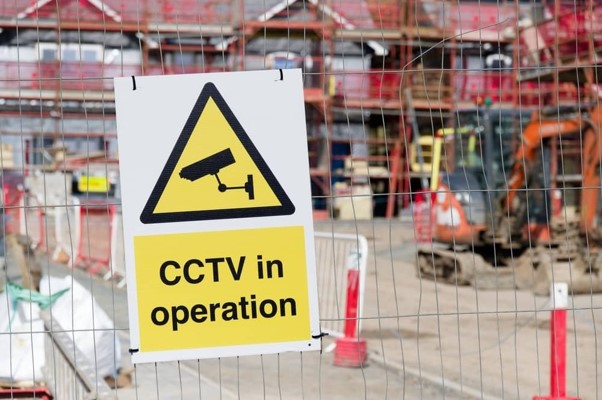
Signage is not legally required for home use in Victoria. However it is recommended as good practice and to keep neighbours informed, to reduce potential neighbourhood disputes.
If you do choose to have signage for your CCTV, it must be clear and visible to anyone that enters the monitored area. The signs must be placed at the entrance to your property, before a person walks into the monitored zone, so they have the choice to not enter, so avoid being recorded.
The signs must clearly state that surveillance is being used.
Choosing a System That Keeps You On the Right Side of the Law
Staying compliant with Victoria’s surveillance laws doesn’t mean you have to compromise on your security. You just need to choose the right system,set it up thoughtfully, and always seek professional assistance when required.
Look for cameras with adjustable viewing angles and privacy masking features so you can block out your neighbour’s yard or windows, while still looking at your own backyard. Also, having an option to disable audio will prevent potential breaches of the Surveillance Devices Act.
Getting the placement and settings right from the start saves you the hassle of adjusting your system later, or worse, dealing with a neighbour dispute or a complaint to Victoria Police. If you’re not confident setting boundaries and privacy zones yourself, a professional installer will know how to configure your cameras so they protect your home without overstepping into someone else’s.
At VIP Alarms, we help Melbourne homeowners choose and install CCTV systems that are both effective and fully compliant with Victorian privacy law, so you can feel secure without any legal grey areas.
